
MAKE THE PROGRAM DRIVE DECISIONS, NOT JUST REPORTS
The dashboards are live and the numbers reconcile. Nobody has decided who signs off on what they show.
—
Finance signed off on the model. The team still doesn’t act on what it says.
—
Every report lands in the same three inboxes and stops there.
—
Two years in, nobody can say who’s actually accountable for the number.
VISIBILITY ISN’T THE SAME AS OWNERSHIP
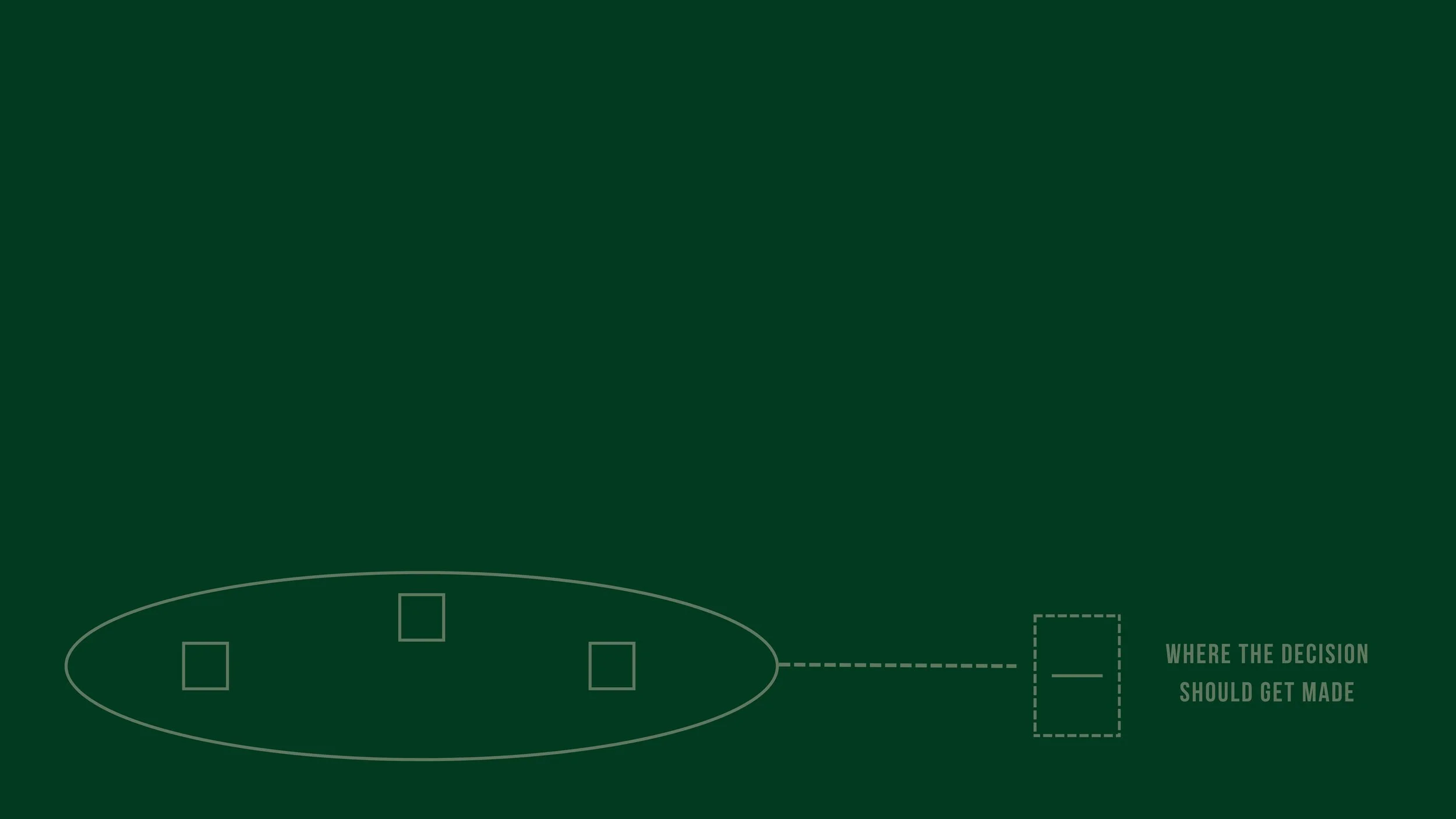
Most stalled programs aren't a data problem. The model reconciles, finance has signed off, and the dashboard updates on schedule. What's missing is simpler and harder to fix: nobody was ever assigned to act on what it shows. The program was built as a tool rollout, not a governance one, so the org chart has an office and a platform, but no seat where a decision about the number actually gets made.
That gap shows up the same way every time. A report goes to three people who each assume someone else will act on it. A recommendation gets raised, discussed, tabled, and raised again next quarter under a different name. The tool isn't broken. The decision was never anyone's to make.
ORG CHART VS. WHAT ACTUALLY HAPPENS
W H E R E T H E G A P S I T S
MODEL OWNER
O R G C H A R T S H O W S
SIGN-OFF
SIGN-OFF
Program Lead
Finance

W H A T A C T U A L L Y H A P P E N S
Builds the model, can’t mandate action on it
Reconciles the number, doesn’t act on it
Made in a hallway, or not made at all
‘‘the model has an owner, the decision doesn’t
WHAT IT TAKES
Not a governance deck. A named decision-maker for the number, and a habit that keeps then in the loop.



MAP THE DECISIONS
Map every decision the program is supposed to inform — what to cut, what to fund, what to renew — and name who actually has to sign off on each one, not who’s copied on the email.
SEPARATE DECIDING FROM CONSULTING
A dozen stakeholders can have a view, but exactly one of them decides. Draw that line explicitly, and write down which side each name sits on.
put a cadence behind it
A standing forum where the number gets used, not just reported, so a decision has somewhere to actually happen.
That third step is what turns TBM or FINOPS from a quarterly report into the forum where a budget call actually gets made.
When the program in question sits outside IT, the same three steps run under ENTERPRISE & DECISION COST MODELING (EDCM) instead.
Most restarts start at step two. The model usually already exists; what’s missing is who’s accountable for it.
WHY WE CAN SAY THAT

01
02
03
We’ve restarted stalled programs from inside the office running them, not from a slide about governance.
We’re tool-agnostic. We’ve picked up programs built on Apptio, ServiceNow ITFM, Serviceware, and homegrown models, and made the existing tool work before recommending a new one.
We don’t promise a restart fixes the politics behind why the decision never got made. What we build is a forum specific enough that the politics has somewhere to go.
IF THAT ISN’T THE ONE YOU WERE HANDED
01

COST-OPTIMIZATION & PROFITABILITY
The last round of cuts held for two quarters, then the spend crept back.
03
Six assignments, one practice behind all of them. If this isn't the one you were handed, here are the other five.

IT SERVICE COSTING
& CHARGEBACK
The bill still reflects last year’s
budget, not what anyone used
this year.
04
PORTFOLIO CONSOLIDATION
& RETIREMENT
Everything on the list looks
essential until someone has to
defend keeping it.
05

INVESTMENT PAYOFF
& TCO MODELING
The AI business case is due
Friday and there’s no baseline
to build it from.
06
M&A INTEGRATION &
RUN-COST CONTROL
Two of everything, and the
synergy number is already on
a slide.
BRING US THE REPORT NOBODY ACTS ON
Thirty minutes with someone who's restarted this before. Send the last report the program produced, and you'll leave with a read on whether this is a data problem or a decision-rights one.