
CHARGE THE BUSINESS FOR
WHAT IT ACTUALLY USES
Every team says their bill looks wrong. Their usage doesn’t match what they’re being charged, because the change was never built from usage in the first place.
—
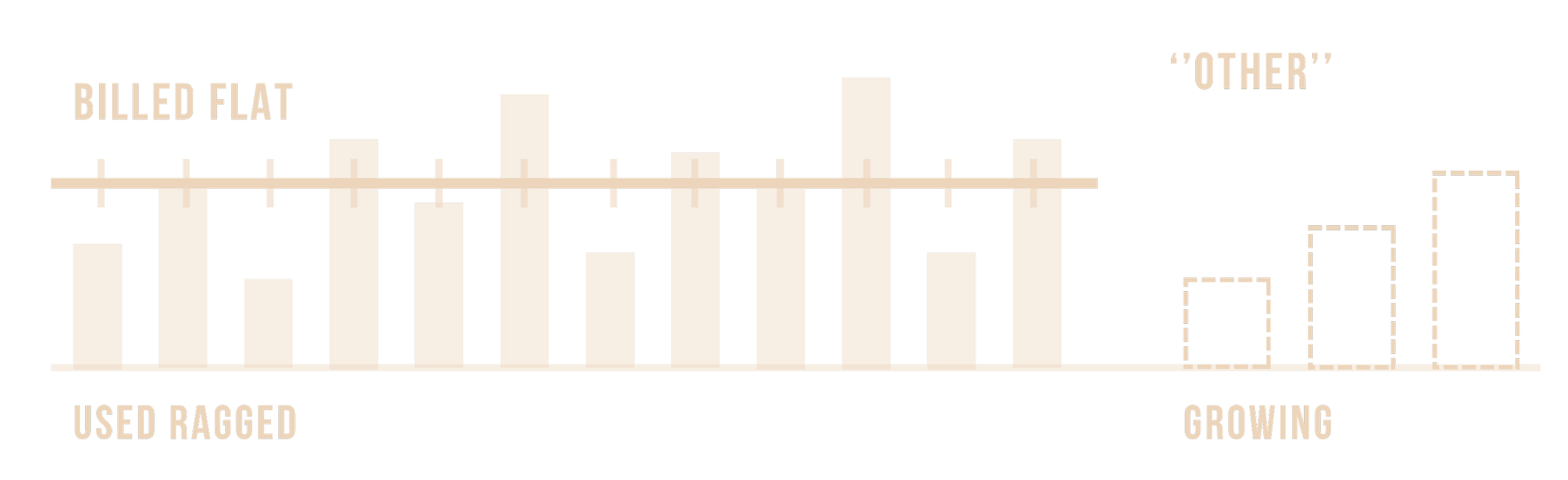
The bill everyone gets is last year’s budget divided by twelve, not what anyone consumed.
—
The one time you tried to change a team directly, they disputed it and you backed off for eighteen months.
—
Shared infrastructure shows up as ‘‘other’’, and ‘‘other’’ keeps growing.
THE BILL NOBODY TRUSTS
Most cost allocation efforts skip a step. They go straight to billing a team for what they supposedly used, before anyone has checked whether the underlying number is right. The first time a team gets charged for capacity they didn’t touch, or for a shared system with no clear allocation logic, they push back, and they’re right to. That one bad bill outlives the program that sent it.
The number is hard to trust because a service’s real cost rarely lives in one place. The general ledger tracks spend by vendor and account, not by the service it supported. Shared infrastructure, the platform three teams run on, the licenses nobody remembers assigning, gets lumped into an ‘‘other’’ line that grows every quarter because nobody owns untangling it.
S E Q U E N C I N G C H E C K