
KNOW WHAT THE COMBINED COMPANY
RUNS BEFORE YOU PROMISE WHAT IT SAVES
The deal closed, the savings target is in the board deck, and you've been asked to make it real. First you need an honest list of what the two companies run today.
Both companies renewed the same vendor in different months, on different terms, and nobody saw it until the second invoice arrived.
—
Integration costs keep landing in the run budget, so the savings you report and the spend you’re asked to explain stop agreeing.
—
—
Two of everything, and the savings number is already on a slide.
A savings target with no inventory behind it
Model vs. reality
What the deal model assumed vs. what the inventory finds
| Item | What the deal model assumed | What the inventory finds |
|---|---|---|
| Applications | What the deal model assumedOne ERP and one CRM to retire | What the inventory findsA second instance of each, plus the custom reporting built around them |
| Contracts | What the deal model assumedVendor consolidation at renewal | What the inventory findsRenewal dates that don't line up, so the leverage arrives in two separate years |
| Infrastructure | What the deal model assumedData center exit by the end of year one | What the inventory findsA migration blocked by an application nobody documented |
| Spend tracking | What the deal model assumedOne technology budget | What the inventory findsIntegration cost and run cost booked in the same lines |
Integration spend is harder to see than savings. Migration contractors, parallel running, and transition services get booked into the same lines as ongoing run cost, so by the end of year one nobody can say which part of the technology bill is the integration finishing and which part is the combined company's new normal. A savings figure reported against that bill can be correct and still impossible to defend. That is the part that gets challenged. The first inventory won't tell you how much of the target survives, but it will show you what the target was built on, and that is something you can start defending.
The deal model puts a number on technology savings, usually built from headcount and a rough read of overlapping systems, before anyone on the integration team has a complete list of what each company actually runs. After close, the list gets built and it rarely matches the model. The acquired company has more applications than the data room showed, a data center contract with time still on it, and licenses held under a subsidiary's name that nobody on the parent side can find.
"Nobody can defend a savings number they can't trace back to a system."
WHAT IT TAKES
Inventory first, then the target, then a standing view of run cost so the savings can be shown to hold.
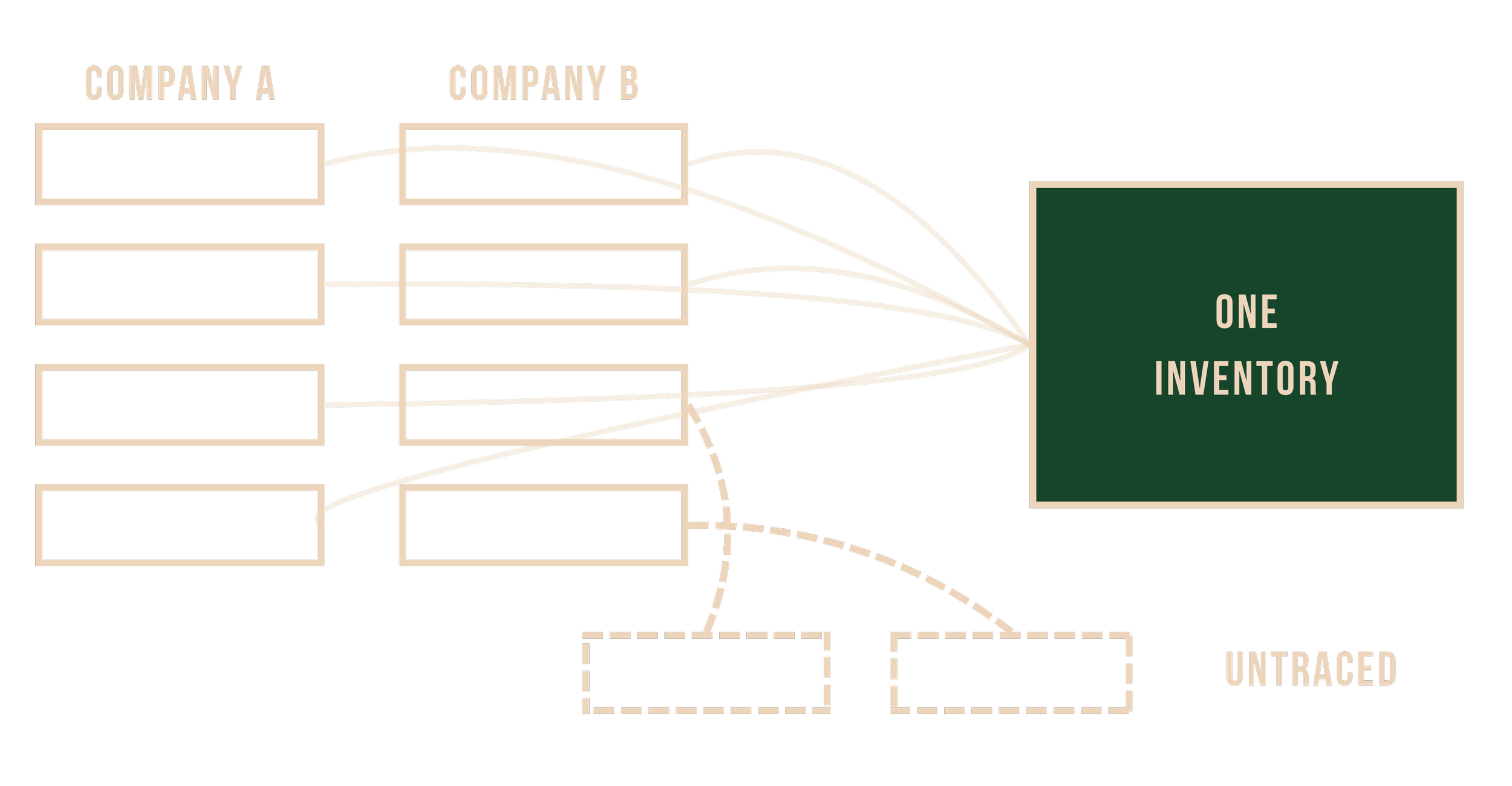
Build one inventory of what the combined company runs: applications, infrastructure, contracts, and the people supporting them, each tied to the entity that owns it today and the business function that depends on it.

one inventory
Every dollar of expected reduction points at a named system, contract, or team with a decision date, and any part of the original number that can’t be traced gets flagged early, while there is still time to say so.

Rebuild the target from it
Book integration spend and run spend apart and report both every month through the first year after close, so the real run rate is visible and a year-one saving can be shown to be a saving.

Separate integration from run
TBM is the discipline behind steps one and three: a common cost taxonomy that lets two companies' spend be read as one, and the standing cost view the integration team reports against. FINOPS joins when the overlap is in cloud, where two sets of accounts and commitments need reconciling. SaaS overlap gets the same treatment: two companies rarely pay for one set of tools.

WHY WE CAN SAY THAT
01
We treat this as a cost-visibility problem first. The integration plan decides what gets retired, and our work is making sure the numbers behind that decision hold up.
Two companies rarely arrive on the same cost tool. We’ve worked in Apptio, ServiceNow ITFM, Serviceware, Nicus, and plain Excel, which matters when one side has a mature model and the other has a workbook.
02
We won’t give you a savings figure before the inventory exists, and we’ll tell you if part of the target can’t be traced to anything.
03
IF THAT ISN’T THE ONE YOU WERE HANDED
Six assignments, one practice behind all of them. If this isn't the one you were handed, here are the other five.
Bring us the savings number you've been asked to hit
Half an hour with a practitioner who's worked a post-close integration. Send the savings target and whatever system list exists, however rough. You'll leave knowing how much of the number traces back to something real, and where the rest is likely to be hiding.
Falconbridge helps CIO and CFO teams get clear, defensible answers on technology spend, including cloud, SaaS, and AI.